
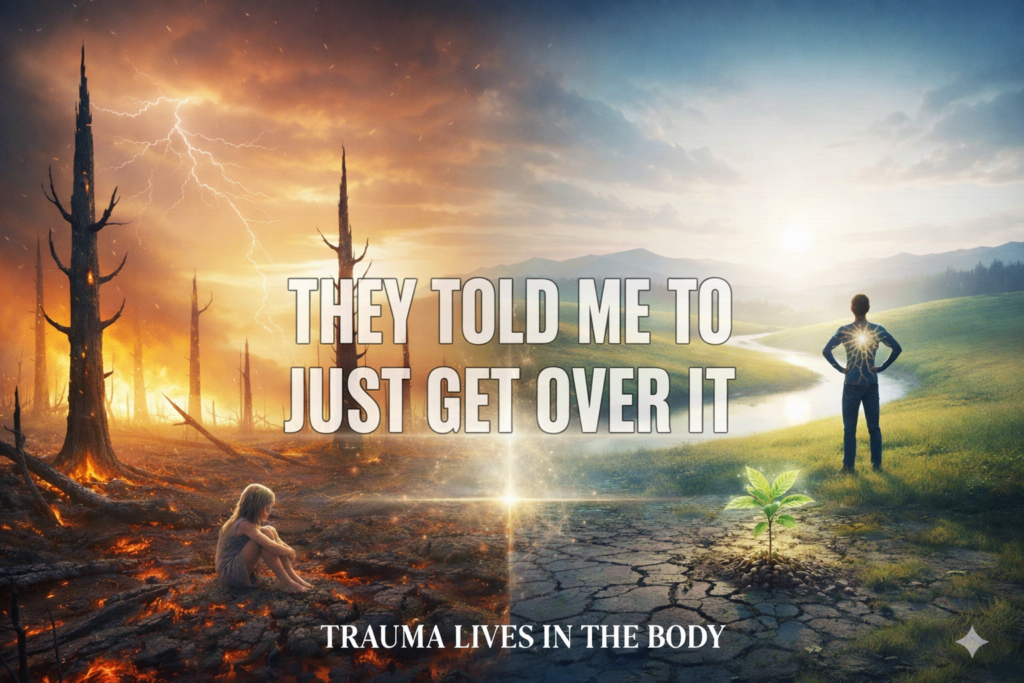
Decades ago, a family member once told me to “just get over” my childhood abuse. I remember feeling completely invalidated. My first thought was: I would if I could… but you have no idea what I went through, or what it actually takes to move on.
These days, I hear softer versions of the same message everywhere — especially on podcasts and in spiritual or personal development spaces such as:
*You’re perfect the way you are.
*You’re not broken.
*Just accept what happened and you’ll heal.
*Love yourself and that’s all you need to do.
*There’s no good or bad, nothing to fix, nothing to work through.
And for some people, those ideas genuinely land which is great for them.
But for many trauma survivors, they don’t. Not because they’re resistant, or unwilling, or “stuck” — but because trauma doesn’t live at the level of ideas. It lives in the body.
If you’ve experienced severe trauma, abuse, or prolonged stress, you know this isn’t just an emotional reaction — it’s a physical reality. Your body and nervous system have been through storms that your mind alone can’t simply “accept” or rationalise away.
Trauma doesn’t just live in your memory. It lives in your body. And until that system learns safety, acceptance isn’t just premature — it can feel like a slap in the face.
You can’t simply think your way out of a nervous system wired for survival.
If your system grew up in constant threat, it learned to expect danger. To be hyper-vigilant. To protect itself at all costs. Telling someone in that state to “just accept it” is like telling them to relax while their house is actively on fire.
This isn’t a mindset problem — it’s a physical reality.
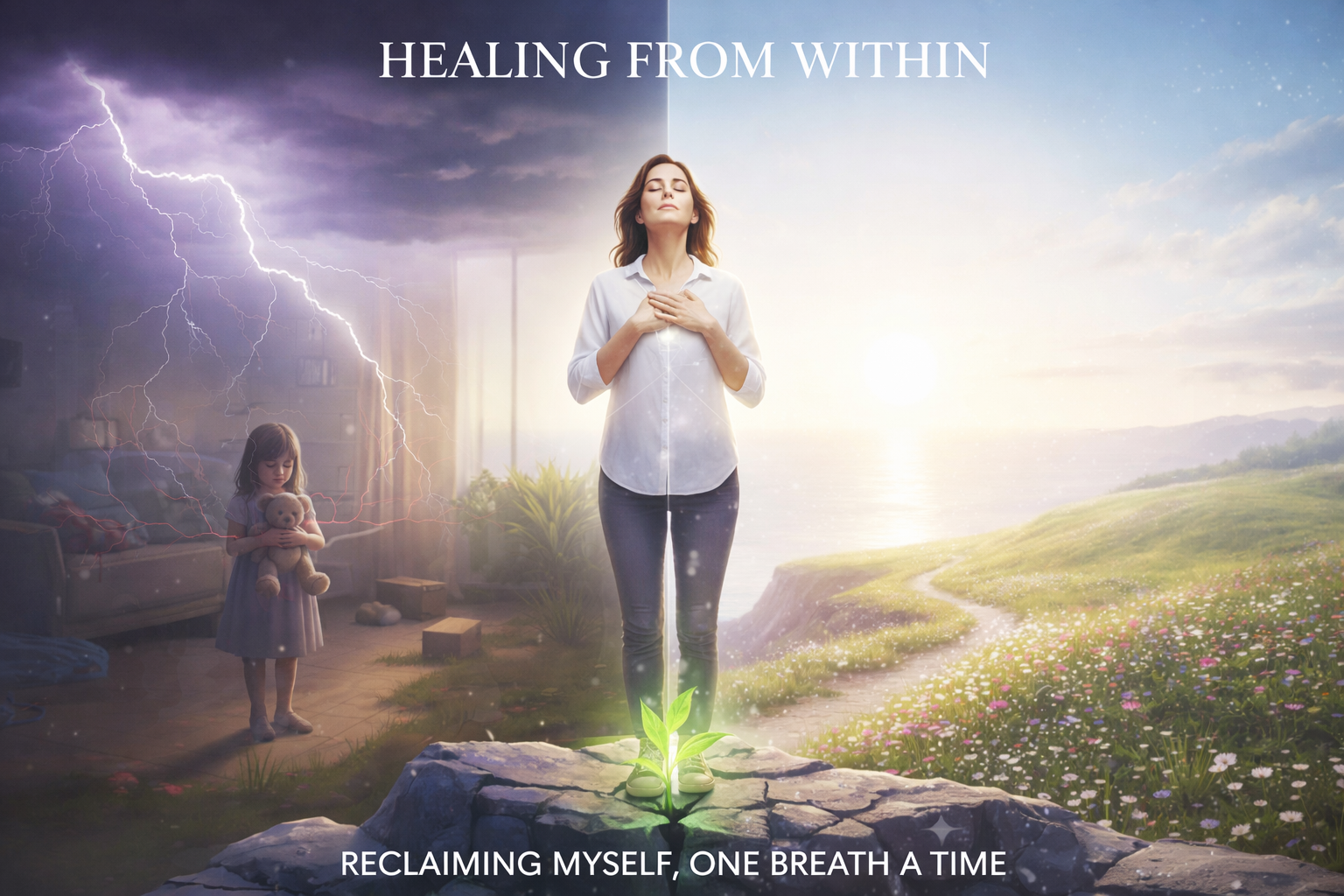
Trauma actually rewires the brain. People who have experienced prolonged, severe stress often show:
Because of these changes, trauma creates automatic triggers. A sound, smell, tone of voice, or memory can set off a full-blown reaction without conscious control.
You can’t simply turn off a trauma trigger by thinking differently. Your nervous system doesn’t work that way.
Here’s a simple way to see how trauma hijacks the nervous system:
Healing interrupts this cycle slowly. Nervous system regulation, processing and integration, and consistent boundaries help the brain learn that the danger has passed.
These reactions aren’t conscious choices — they are hardwired survival responses.
Most people haven’t experienced severe, ongoing trauma. Their nervous system was able to settle once the difficult moment passed.
So when they say, “I went through a tough time too, and I got over it,” they’re speaking from that perspective — a body that understood the threat was temporary and could relax.
For someone with trauma, particularly from childhood, it’s different. Trauma becomes embedded in the body’s blueprint. The nervous system never received the signal that it was safe; it learned that danger could strike at any moment, and so it stayed on constant high alert.
Trauma isn’t just a memory. It’s a physical imprint in the brain and body.
Childhood trauma usually comes with invalidation. Being told it didn’t happen. That it wasn’t that bad. That you were too sensitive.
So when someone jumps straight to “acceptance,” it can echo the very harm that caused the trauma in the first place.
This is often spiritual bypassing — using spiritual ideas to avoid the messy, painful, and necessary work of grief, anger, and truth-telling.
Healing isn’t about forgetting. It’s about remembering and validating. Saying:
This was wrong. This was real. And I am allowed to be hurt, angry, and changed by it.
Only then can the nervous system begin to soften enough to even consider acceptance.
The brain is neuroplastic — it can change. Trauma may rewire it, but it can also be rewired toward safety.
Healing from foundational trauma is like rehabilitating a limb that was broken and never set properly. You don’t just decide to walk normally one day. You relearn. You strengthen new pathways. You work with the lingering pain rather than pretending it isn’t there.
It’s not a single epiphany. It’s thousands of daily choices and ongoing therapy — choosing safety, boundaries, and yourself again and again.
That’s why acceptance is usually the destination, not the starting point. Trauma becomes a fact of your history, not the master of your future.
Yes, it’s possible to reach a place of acceptance, self-love, and ease with life. But that state comes after deep healing — after regulating the nervous system, working through triggers, creating safety, and fully integrating what happened.
For some, the idea of “just change your mind” may work. For others — especially those climbing out of the deep valleys shaped by childhood trauma — it simply doesn’t.
That doesn’t mean acceptance is out of reach. It means it comes later, on its own timeline, and it looks different for everyone. There is no one-size-fits-all path.
Take what resonates for you — there are many philosophies, and what helps one person may not fit another. What matters is this: you deserve validation, compassion, and a process that truly supports your healing.


Not a member yet? Register now
Are you a member? Login now